
Fast charging, explained in one line: the charger, the cable and the phone must all speak the same protocol, and the phone decides how much power it takes. That’s why a 100W brick won’t charge a 25W phone any faster. Most phones now use USB Power Delivery (PD) or its PPS mode. OnePlus and OPPO add SUPERVOOC, which reaches full speed only with their own brick and cable.
Key takeaway
- Samsung and Pixel: buy a USB-C charger with PPS at the wattage your phone supports.
- iPhone: any good USB-C PD charger works; iPhone 17 models need 40W or more for their top speed.
- OnePlus: full SUPERVOOC speed needs the official brick and cable; other chargers work, but slower.
- Cable: a 3A USB-C cable covers up to 60W; above that you need a 5A e-marked cable.
How fast charging works
Power is volts multiplied by amps. Basic USB gives 5V, so pushing more power means raising the voltage, the current or both. A fast charger doesn’t force power into the phone. When you plug in, the charger lists what it can supply, the phone picks one option, and the charger switches to it. If they can’t agree, everything falls back to slow 5V charging.
Charging is also fastest when the battery is low. Most phones hit their peak wattage for the first 10-20 minutes, then slow down as the battery fills and warms up. That’s why brands quote “50% in 20 minutes” rather than full-charge times.
Fast charging standards compared: PD, PPS, QC and SUPERVOOC
| Protocol | Who uses it | How it works | Top power |
|---|---|---|---|
| USB PD (fixed voltage) | iPhone, Pixel, laptops, most power banks | Steps of 5V, 9V, 15V and 20V | 100W, or 240W with PD 3.1 EPR |
| PPS (part of USB PD 3.0) | Samsung Super Fast Charging, Pixel | Voltage adjusts in small steps on request | Depends on the charger, usually 25-100W |
| AVS (USB PD 3.1 and later) | Newer iPhones (17 and 18 series) | Adjustable voltage at higher power levels | Up to 240W in the spec |
| Qualcomm Quick Charge | Some Android phones and chargers | QC 3.0 varies voltage over USB-A; QC 4+ and 5 work with USB PD | 100W or more with QC 5 |
| SUPERVOOC | OnePlus, OPPO, realme | Lower voltage, high current, controlled by the brand’s brick and cable | Up to 120W on the OnePlus 15 |
USB PD is the common language. The USB-IF Power Delivery page says PD reached 100W at 20V over 5A cables, and PD 3.1 extends that to 240W with new 28V, 36V and 48V levels. PPS sits inside PD: instead of jumping between fixed voltages, the phone asks for small changes, so less energy turns into heat inside the phone.
Brand names often sit on top of these standards. Samsung’s “Super Fast Charging” is USB PD with PPS. Qualcomm’s Quick Charge 5 is compatible with USB PD PPS, so a good PD PPS charger covers most Snapdragon phones too. SUPERVOOC is the exception: it’s proprietary, and other chargers fall back to PD or PPS speeds.
Charger, cable and phone must match
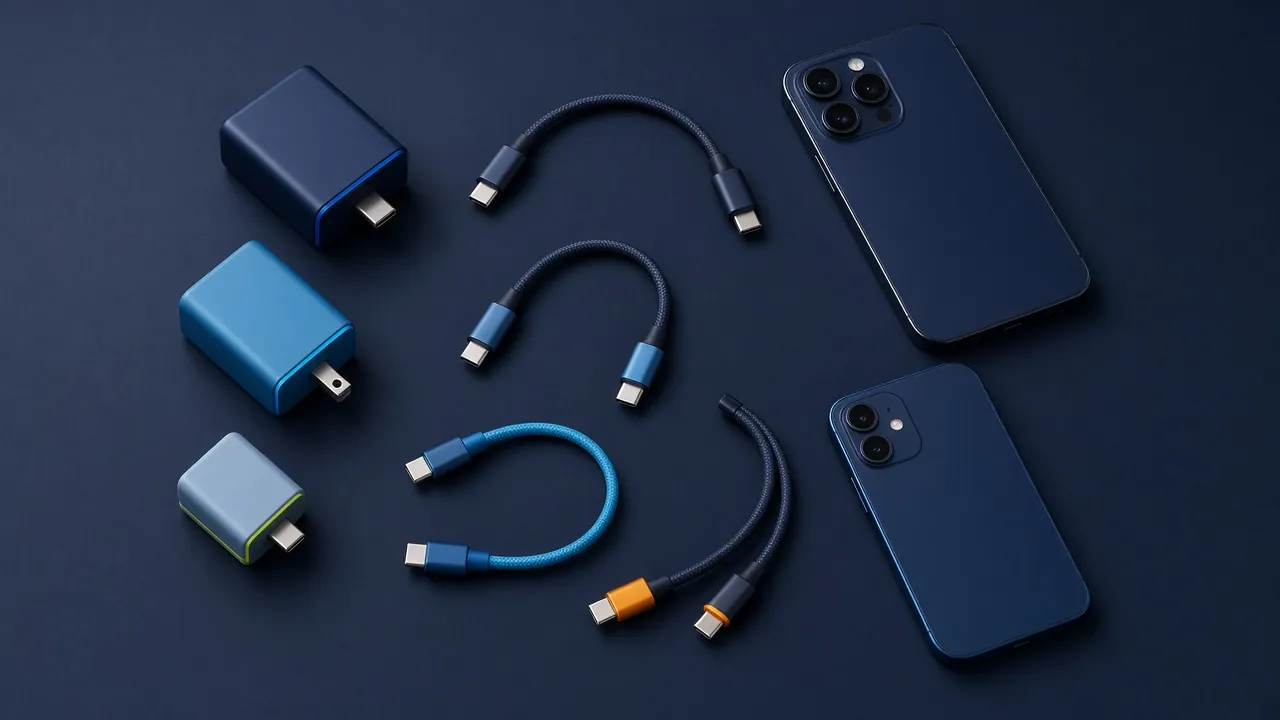
The slowest part of the chain sets the speed. A Galaxy S25 rated for 25W still charges at 25W on a 100W laptop brick. A 45W Samsung charger runs at a lower speed on a Galaxy S24 Ultra unless you also use a 5A cable; Samsung says the S25 Ultra and S25+ can reach 45W on a standard 3A cable.
Small details catch people out. The Pixel 11 Pro XL’s 45W mode needs a PPS charger that goes up to 21V; Android Authority found a 67W PPS plug that could deliver only 25W to it. Some SUPERVOOC bricks offer much lower PD output than their headline wattage, so a OnePlus charger may charge a Samsung or iPhone slowly.
How to read a charger label
The small print on the brick tells you more than the wattage on the box. Samsung’s official 45W adapter, for example, lists:
- PDO (fixed PD): 9V⎓3A, 15V⎓3A, 20V⎓2.25A. That’s 27W, 45W and 45W.
- PPS: 5.0-20.0V⎓2.25A. That’s the range the phone can request in small steps.
- What to look for: the letters “PPS” and a voltage range for Samsung and Pixel; “PD” with the wattage you need for iPhone.
Cables matter more than you think
- 3A USB-C cable: handles up to 60W (20V at 3A). Enough for most phones, except SUPERVOOC at full speed and some Samsung 45W modes.
- 5A e-marked cable: needed for 100W, and for Samsung 45W charging on most models before the S25+ and S25 Ultra.
- 240W cables: built for PD 3.1 laptops and power stations; they also work for phones.
- USB-A to USB-C cables: can’t carry USB PD, so they cap most phones at slower speeds.
A cable’s data speed doesn’t affect charging. A cheap USB 2.0 cable rated at 5A charges just as fast as an expensive USB4 cable rated at 5A.
Which charger to buy for your phone
| Phone | Look for | Charger rating | Cable |
|---|---|---|---|
| Galaxy S26 Ultra | Super Fast Charging 3.0 (USB PD 3.1 PPS) | 60W | 5A cable is the safe choice |
| Galaxy S25+, S25 Ultra, S26+ | Super Fast Charging 2.0 (PD 3.0 PPS) | 45W | Standard 3A works on S25+ and S25 Ultra |
| Galaxy S24+, S24 Ultra and older 45W models | PD 3.0 PPS | 45W | 5A e-marked cable |
| Galaxy S25, S26, FE and most A series | Super Fast Charging (PPS) | 25W | Any good 3A USB-C cable |
| Pixel 10 Pro XL, Pixel 11 Pro XL | PPS up to 21V | 45W | 3A USB-C |
| Other Pixel 9, 10 and 11 models | PPS | 30W or more | 3A USB-C |
| iPhone 17, 17 Pro, 17 Pro Max | USB PD | 40W or more | USB-C cable from the box |
| iPhone 18 Pro models | USB PD 3.2 with AVS, 60W-capable | 60W-capable | USB-C cable from the box |
| iPhone 15, 16, 17e, Air | USB PD | 20W or more | USB-C cable |
| OnePlus 15 | SUPERVOOC (official brick) | 120W SUPERVOOC | Official SUPERVOOC cable |
For Samsung, the Samsung charger compatibility page lists which Galaxy models support each Super Fast Charging tier. For iPhone, Apple’s fast-charging support page says iPhone 17 models reach 50% in about 20 minutes with a 40W or higher adapter. Google’s Pixel help page lists any PPS adapter rated for 30W or more.
Comparing phones partly on charging? Our roundups of Samsung phones worth buying and OnePlus smartphones to buy list the charging speed for each pick.
Best value: one 65W USB-C charger with PD and PPS (PPS up to 21V) covers almost every phone above, plus a laptop. It won’t hit SUPERVOOC speeds, but it will charge a OnePlus phone well.
Fast charging on power banks and while travelling
Power banks follow the same rules. A bank’s headline wattage may come from a proprietary mode your phone doesn’t use, so check the USB PD output figure, and PPS if you carry a Samsung. Our picks of 20000mAh power banks with fast charging suit long trips, and 10000mAh power banks are easier to pocket. iPhone users who prefer cables off can look at wireless power banks for iPhone, which charge slower than wired.
Abroad, most phone chargers accept 100-240V (check the input line on the label). A plain plug adapter or a universal travel adapter with USB-C is all you need.
Does fast charging damage the battery?
Heat ages lithium-ion batteries faster than wattage alone. Phones protect themselves by slowing down as the battery fills or gets warm, and many offer options like Samsung’s Super fast charging toggle or adaptive charging that tops up slowly overnight. If you charge overnight anyway, a slower charge is gentler; save top speed for when you’re in a hurry.
Common mistakes with fast charging
- Buying a higher-wattage brick than the phone supports and expecting faster charging.
- Charging from a laptop or USB-A port and expecting fast-charge speeds.
- Buying a 45W charger without PPS for a Samsung or Pixel.
- Assuming a OnePlus SUPERVOOC brick will fast charge an iPhone or Galaxy.
- Buying unbranded chargers with no BIS registration mark from roadside shops or marketplaces.
Since most phones no longer ship with a charger, factor the brick and cable into the price. Our post on the hidden costs of cheap smartphones covers this and other add-on costs.
How we researched this
This explainer is research-based, not hands-on. We read the USB-IF’s Power Delivery material, Qualcomm’s Quick Charge 5 announcement, and the charging pages from Samsung, Google, Apple and OnePlus, plus independent charging tests where brands don’t publish details. We haven’t measured charging speeds ourselves for this article. Last checked: November 2026.
Frequently asked questions
Fast charging explained simply: what makes a charger fast?
A charger is fast when it and your phone agree on a higher-power mode, such as USB PD, PPS or SUPERVOOC, over a cable that can carry it. The phone picks the power level it can handle. Without a shared protocol, both fall back to slow 5V charging.
Will a 100W charger damage my 25W phone?
No. The phone only requests the power it supports, so a 100W USB-C PD charger delivers about 25W to a 25W phone. It won’t charge faster, but it won’t harm the battery either. Use a reputable charger with proper safety certification.
What is the difference between USB PD and PPS?
USB PD offers fixed voltage steps such as 9V, 15V and 20V. PPS is part of USB PD 3.0 and lets the phone ask for small voltage changes in real time. Samsung and Pixel phones need PPS for their fastest modes; iPhones use standard PD.
Can I use a Samsung charger for my iPhone?
Yes. Samsung’s 25W and 45W chargers support standard USB PD, which iPhones use. For an iPhone 17’s top speed, Apple recommends a 40W or higher adapter, so the 45W model is the closer match. The 25W adapter still charges it well, just slower.
Does a OnePlus SUPERVOOC charger work with other phones?
It works, but usually slowly. SUPERVOOC speeds only apply to OnePlus, OPPO or realme phones with the official cable. Other phones fall back to whatever PD output the brick offers, which is often far lower than the number printed on it. Check its PD rating.
Do I need a special cable for fast charging?
Up to 60W, any good USB-C to USB-C cable rated at 3A works. For 100W, and for Samsung 45W on most models before the S25+ and S25 Ultra, use a 5A e-marked cable. SUPERVOOC needs the brand’s own cable for full speed.
Is fast charging bad for battery life?
Heat does more damage than fast charging itself. Phones slow down as the battery fills or warms, which limits wear. For overnight charging, a slower charger or your phone’s adaptive charging mode is gentler. Use full speed when you need a quick top-up.
What is the best charger for a Samsung Galaxy phone?
Choose a USB-C charger with PPS at the wattage your Galaxy supports: 25W for base and A-series models, 45W for Plus and Ultra models, and 60W for the S26 Ultra. Samsung’s own adapters work, as do PPS chargers from known brands.
Our verdict
With fast charging explained, the buying rule is simple: match the protocol and wattage to your phone. Samsung and Pixel owners need PPS, iPhone owners need USB PD from 20W up to a 60W-capable adapter depending on the model, and OnePlus owners should keep the official SUPERVOOC brick. If you want one charger for everything, a 65W PD charger with 21V PPS and a 5A cable is the safe buy. Skip unbranded bricks. Power banks follow the same rules, and our explainer on power bank real capacity shows why the mAh on the box isn’t what reaches your phone.