


For most buyers in India, the Spigen ArcPack 10000mAh is the power bank to get: 30W fast charging, a built-in USB-C cable and 200 g, for roughly ₹1,600 to ₹2,700 on Spigen India depending on colour. Under ₹1,200, the boAt EnergyShroom PB300 and Xiaomi Power Bank 3i do the basics well. iPhone users who want magnetic charging should look at the Anker MagGo 10K.
10000mAh power banks compared
| Power bank | Max output | Built-in cable | Weight | Price in India (approx.) |
| Spigen ArcPack (PA2401) | 30W | USB-C | 200 g | ₹1,582 to ₹2,659 (Spigen India) |
| Anker Nano 10K (30W) | 30W | USB-C | 215 g | ₹5,999 (Anker India) |
| Anker MagGo 10K | 15W Qi2 wireless + USB-C | No (magnetic) | Not listed here | Around ₹8,499 (Anker India) |
| Samsung 25W 10000mAh (EB-P3400) | 25W | No (cable in box) | 210 g | Around ₹3,000 |
| Belkin BoostCharge Plus 10K | 23W total | USB-C and Lightning | About 245 g | Around ₹7,200 (Amazon.in) |
| Portronics Luxcell 10K | 22.5W | No | About 250 g | Around ₹1,000 (MRP ₹1,999) |
| boAt EnergyShroom PB300 | 22.5W | No | 255 g | ₹1,099 to ₹1,199 (boAt store) |
| Nitecore NB10000 Gen3 | 22.5W per USB-C port | No | 150 g | Imported, check listing |
| Xiaomi Power Bank 3i | 18W | No | Not listed here | ₹1,099 (Mi.com, MRP ₹2,199) |
| INIU BI-B41 | 15W total | No | 198 g | Imported, check listing |
Last checked: November 2026, on brand stores where available and Amazon.in otherwise. Power bank prices in India change weekly with sales, and our earlier prices for several models were well off, so confirm before you buy.
What a 10000mAh power bank really gives you
The 10,000mAh figure is measured at the battery cell’s 3.7V. Converting that to the 5V to 9V your phone takes, plus heat losses, means roughly 60 to 70 percent reaches the phone. In practice, that’s about one and a half charges for a phone with a 5,000mAh battery, which is what most Indian Android phones now ship with.
If you need two or three full charges, step up to one of the 20000mAh power banks with fast charging. If you mostly charge an iPhone wirelessly, our list of wireless power banks for iPhone goes deeper on MagSafe and Qi2.
Best overall: Spigen ArcPack 10000mAh
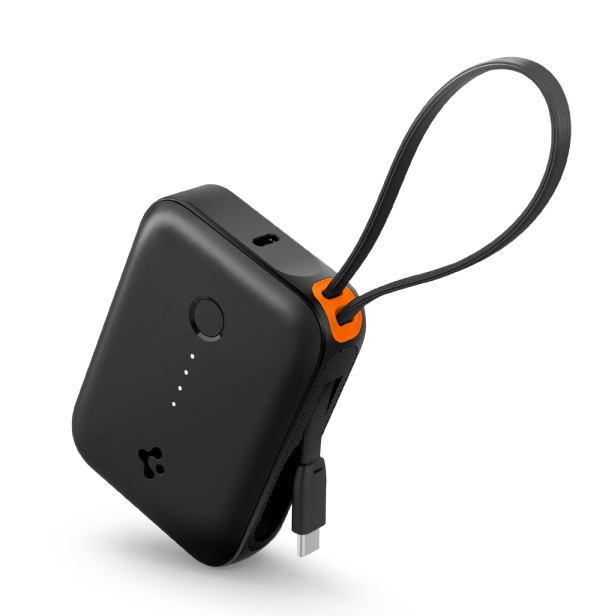
The ArcPack has a USB-C cable built into the body, plus a separate USB-C and a USB-A port. Spigen rates it at up to 30W in and out over USB-C (PD 3.0 and PPS) and 22.5W with Quick Charge, which is enough to fast-charge most phones and top up a tablet. It weighs 200 g and comes with a 12-month warranty.
Spigen India listed it between ₹1,582 and ₹2,659 depending on colour (MRP ₹3,399) when we checked. See the Spigen ArcPack PA2401 page.
Best if you want the Anker name: Anker Nano 10K
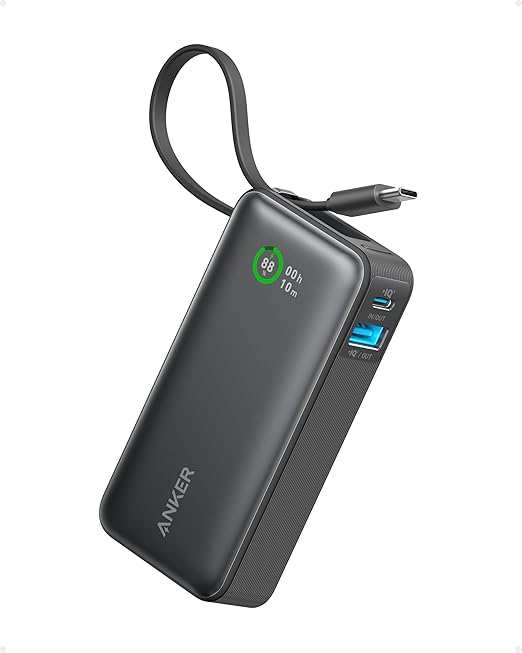
Anker’s Nano has the same idea as the Spigen, a built-in USB-C cable plus one USB-C and one USB-A port, with 30W charging in both directions. It weighs 215 g and measures about 104 x 52 x 26 mm, so it’s chunkier than a slim bank but shorter. Anker India lists it at ₹5,999 (MRP ₹7,999), which is a lot more than the Spigen for a similar spec.
Buy it if you want Anker’s service network. See the Anker India Nano page.
Best magnetic option for iPhone: Anker MagGo 10K
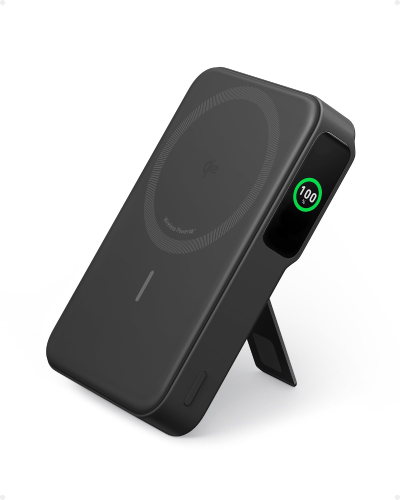
This snaps onto the back of a MagSafe iPhone and charges at up to 15W wirelessly, since it’s Qi2 certified. It has a small display showing charge left and a fold-out stand, so you can prop the phone up while it charges. There’s a USB-C port for wired charging too.
Anker India’s listing showed ₹8,499 when we checked, and authorised resellers often sell it for less. Android phones without magnets will need a magnetic ring or a cable.
Best for Samsung Galaxy phones: Samsung 25W 10000mAh
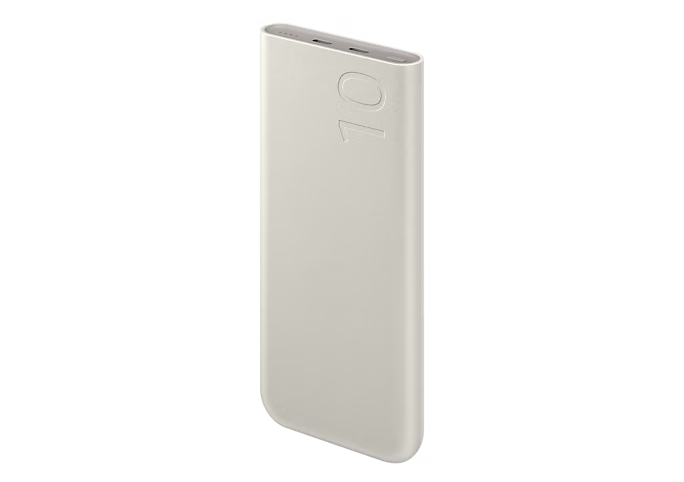
Samsung’s EB-P3400 has two USB-C ports and supports Samsung’s 25W Super Fast Charging on compatible Galaxy phones. Charging two devices at once drops each port to 9W. It weighs 210 g and comes with a USB-C cable in the box, but there’s no built-in cable or USB-A port. It sells for about ₹3,000. See the Samsung India product page.
Best with both cables built in: Belkin BoostCharge Plus 10K
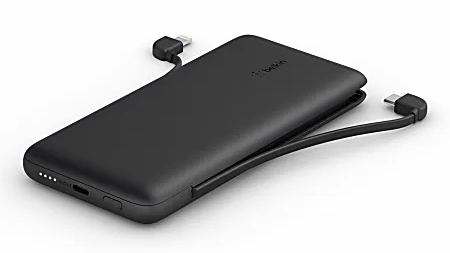
This one has both a Lightning and a USB-C cable built in, plus an extra USB-C port, so a household with an older iPhone and an Android phone can share it. Output is 23W total (18W from USB-C), and it supports pass-through charging. It’s pricey in India at around ₹7,200 on Amazon.in, much more than our earlier figure suggested.
Best budget picks: boAt EnergyShroom PB300 and Portronics Luxcell 10K
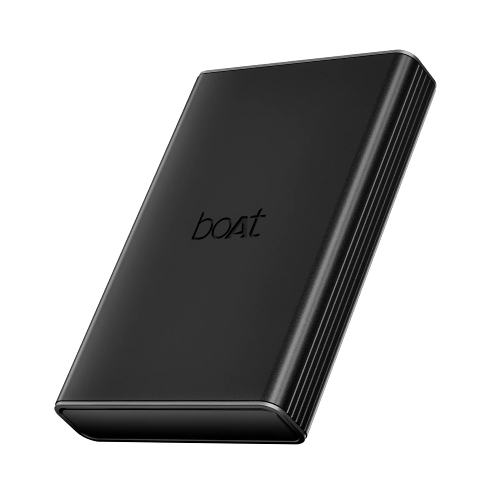
The boAt PB300 does 22.5W fast charging, has two USB-A outputs, a two-way USB-C port and a micro-USB input, and boAt lists 12-layer protection. It weighs 255 g. The boAt store had it at ₹1,099 to ₹1,199 (MRP ₹2,999). See the boAt PB300 page.
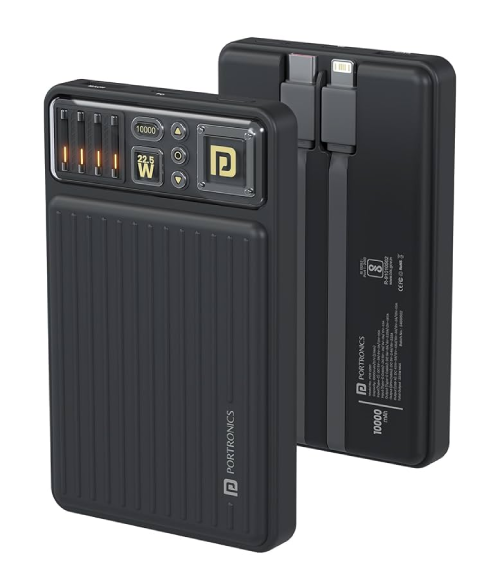
The Portronics Luxcell 10K is similar: 22.5W from USB-A, 20W PD from USB-C, an LED charge indicator and BIS certification, at around ₹1,000 against an MRP of ₹1,999. Both are heavier than the Spigen, and neither has a built-in cable.
Best for hiking: Nitecore NB10000 Gen3
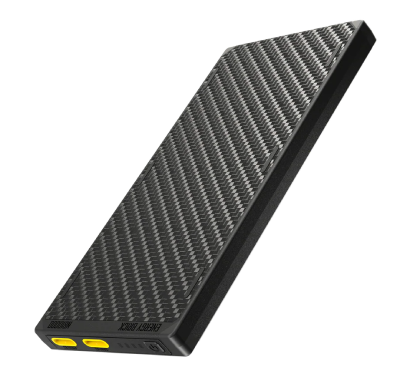
Nitecore uses a carbon fibre body to get the weight down to about 150 g, the lightest here, and rates it IPX5 against splashes. Each USB-C port gives up to 22.5W, dropping to 15W total when you use both.
It’s mostly sold as an import in India, so price and warranty depend on the seller. On multi-day treks without power, one of our solar power banks for outdoor use is a better fit. See Nitecore’s NB10000 Gen3 page.
Cheapest from a big brand: Xiaomi Power Bank 3i
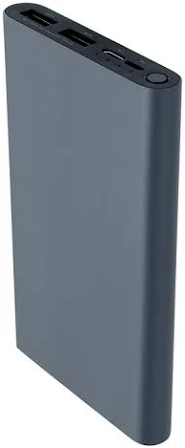
Xiaomi’s 3i has an aluminium body, 18W two-way fast charging, both micro-USB and USB-C inputs, two USB-A outputs and 12-layer circuit protection. Mi.com India listed it at ₹1,099 (MRP ₹2,199). 18W is slower than the others, but it’s fine for overnight top-ups and older phones.
Slim, with a flashlight: INIU BI-B41
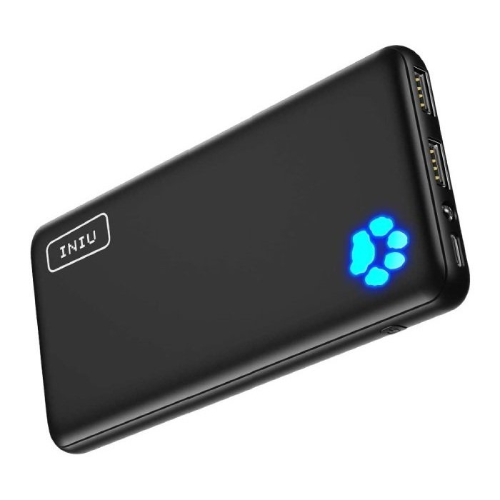
INIU’s slim BI-B41 weighs 198 g and has a built-in LED flashlight, one USB-C port and two USB-A ports. Our earlier version called it fast charging, which was wrong: output tops out at 15W total, and it doesn’t support PD or Quick Charge. It’s mainly an import here. Buy it only if the flashlight matters to you.
How to choose a 10000mAh power bank
- Match the charging standard to your phone. iPhones and Pixels use USB PD, Samsung uses PD with PPS for 25W, and many Chinese brands use their own standards that power banks can’t match.
- Built-in cable or not: a built-in USB-C cable means one less thing to forget, but it’s also the first part to wear out.
- Buy BIS-certified units in India. Avoid unbranded banks with suspiciously high capacity claims, which is one of the hidden costs of cheap electronics.
- Weight adds up. 150 g to 255 g is a big difference in a trouser pocket.
Flying with a power bank
A 10,000mAh bank is about 37Wh, under the 100Wh limit most airlines allow in cabin baggage without approval, according to IATA’s lithium battery guidance for passengers. Never put it in checked luggage.
In India, a DGCA advisory issued in November 2025 also bars using or charging power banks during a flight and says they shouldn’t go in overhead bins. Financial Express explains the DGCA rules. Keep the bank in the bag at your feet. Pair it with a universal travel adapter with USB-C and a GPS luggage tracker for longer trips.
How we researched this
We checked each model on the brand’s Indian store where one exists, Amazon.in, and the makers’ spec pages in November 2026, and corrected several specs and prices from our earlier version. We did not test capacity or charging speed ourselves.
FAQs
How many times can a 10000mAh power bank charge my phone?
About one and a half times for a phone with a 5,000mAh battery, and around two times for a 4,000mAh phone. Only 60 to 70 percent of the rated capacity reaches your phone after voltage conversion and heat losses, so don’t expect the full 10,000mAh.
How long does a 10000mAh power bank take to recharge?
It depends on input speed. A bank that accepts 20W to 30W over USB-C refills in roughly two to three hours with a matching charger. An 18W bank or a slow 10W phone charger can take five hours or more, so use a USB PD charger if you can.
Can a 10000mAh power bank charge a laptop?
Only a small one, and only partly. A 30W USB-C bank like the Spigen ArcPack or Anker Nano can top up a thin USB-C laptop or an iPad, but 10,000mAh won’t give a full laptop charge. For laptops, look at 20,000mAh banks with 45W or more.
Is it safe to leave a power bank charging overnight?
Branded banks with overcharge protection stop charging when full, so it’s generally fine. Charge on a hard surface, not a bed or pillow, keep it out of direct sun, and stop using any bank that swells, gets very hot or smells odd.