

An ₹80,000 laptop feels heavy. “Just ₹6,666 a month,” somehow, feels light — barely more than a couple of food deliveries. That single reframing, from a big one-time price to a small monthly number, is the most powerful sales tool in tech retail. It’s also where a lot of buyers quietly get into trouble.
EMI — Equated Monthly Instalments — isn’t evil. Used well, it’s a genuinely smart financial tool. Used carelessly, it’s a trap that makes you buy more than you can afford, pay more than the sticker price, and stay in debt for a gadget that’s obsolete before it’s paid off. This guide is a deep, honest look at buying tech on EMI — how it really works, the hidden costs (especially in “No Cost EMI”), when it makes sense, and when to walk away. No hype, just the full picture before you spend.
How we approached this: a research-based, India-first explainer cross-checked against how No Cost EMI, credit card EMI, and consumer-durable loans actually work, including RBI’s position on “zero-interest” schemes and current fee structures. There are no affiliate links here, and this is general information, not personalised financial advice — always read your own offer’s fine print.
⚡ The short answer
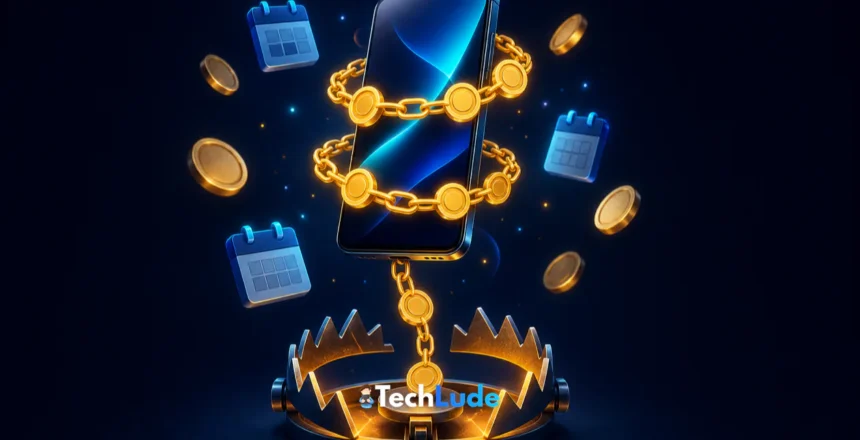
EMI is a tool, not a trap in itself. It becomes a trap when it makes you buy something you couldn’t otherwise afford, hides the true cost, or locks you into paying for a depreciating gadget long after the excitement fades. A genuine No Cost EMI on something you were going to buy anyway, paid on time, can be fine — even smart. An interest-bearing EMI on a want you can’t really afford is where the trap snaps shut.
First, What EMI Actually Is
An EMI splits a purchase into fixed monthly payments over a set tenure (say 3, 6, 12, or 24 months). Each instalment repays a slice of the principal (the product price) plus, usually, some interest (the cost of borrowing). A ₹60,000 phone on a 12-month EMI becomes twelve payments — the retailer gets paid in full upfront by the bank or lender, and you repay the lender monthly.
That’s the mechanic. The important part is everything the glossy “₹X/month” banner leaves out — starting with what it does to your brain.
The Psychology: Why EMI Makes You Spend More
Before the numbers, understand the mind games, because they’re the real trap. EMI works on retailers’ behalf in a few predictable ways:
- It anchors you to the monthly cost, not the total. “₹2,500/month” feels affordable in a way “₹60,000” never does — even though they’re the same thing.
- It makes you buy up a tier. Once you think in monthly terms, the jump from the model you need to the pricier one is “just ₹800 more a month,” so you stretch.
- It separates the pain of paying from the pleasure of buying. You get the gadget today; the cost arrives quietly, later, in pieces you stop noticing.
- It normalises always being in debt. One EMI becomes three, and a chunk of every salary is pre-committed before it arrives.
💡 The reframe that protects you: before any EMI, convert it back. Multiply the monthly figure by the tenure and ask, “Would I buy this for that full price, in cash, today?” If the honest answer is no, the EMI is talking you into it.
“No Cost EMI”: The Biggest Myth in Tech Retail
“No Cost EMI” is the headline offer on almost every phone and laptop — and it’s not quite what it sounds like. Here’s the truth: the bank still charges interest on the loan. The retailer simply gives you a discount equal to that interest, so your instalments add up to the sticker price. The interest doesn’t vanish; it’s just been rearranged so you don’t see it. In fact, the RBI flagged years ago that a truly “zero-interest” loan isn’t really a thing — the interest always exists somewhere.
And a few real costs survive the rebranding and land on you:
- 18% GST on the interest. Even when the seller absorbs the interest, the government still charges 18% GST on that interest amount — and you pay it, often bundled into your first instalment.
- The lost upfront discount. Many products have an instant cash or card discount if you pay in full. Choose No Cost EMI and you typically forfeit that discount — it quietly becomes the interest the seller is “absorbing.”
- A processing fee. Banks often add a processing fee (a few hundred rupees) plus 18% GST on top.
- Your credit limit gets blocked. On a credit card, the full product price is blocked against your limit from day one and released only as you repay — so your available credit drops for the whole tenure.
A Worked Example: The Real Cost of “No Cost”
Numbers make it concrete. Say you’re buying a laptop priced at ₹80,000, with a ₹4,000 instant discount available if you pay upfront, versus a 12-month “No Cost EMI.” Figures are illustrative — exact interest, GST, and fees vary by card, bank, and offer — but the shape is always the same:
| How you pay | What you actually pay | Notes |
|---|---|---|
| Upfront (cash/card) | ~₹76,000 | Full price minus the ₹4,000 instant discount |
| “No Cost” EMI (12 mo) | ~₹81,300 | ₹80,000 in EMIs + ~18% GST on the bank’s interest (~₹1,100) + ~₹200 processing fee, and you lose the ₹4,000 discount |
| Interest EMI (~14% p.a.) | ~₹87,500 | ₹80,000 + ~₹6,200 interest + GST + processing fee |
Notice the punchline: the “No Cost” option isn’t the cheapest — paying upfront is, because you keep the discount and dodge the GST and fees. No Cost EMI is often reasonable, but calling it “free” is marketing, not math.
The Hidden Costs of Buying Tech on EMI
Across the different EMI types, these are the charges that hide behind the monthly number. Not all apply to every offer, but check for each one:
- GST on interest — 18%, even on “No Cost EMI.”
- Processing / convenience / joining fees — from a few hundred rupees; some cards or EMI networks charge a one-time joining fee too.
- The forfeited upfront discount — often the biggest hidden cost of all.
- Down payment — some in-store loans need one (though many now advertise zero down payment on select models).
- Foreclosure / pre-closure terms — some lenders let you close early free (after the first EMI), others charge a fee; check before you assume you can escape early.
- Late-payment penalties — these are brutal. Consumer-durable lenders can charge penal interest around 36% per annum on overdue amounts, plus bounce charges (often ~₹500) if an auto-debit fails.
- Blocked credit limit — reduces your available credit for the whole tenure, which can hurt in an emergency.
- Opportunity cost — money committed to instalments is money not in your emergency fund or earning returns elsewhere.
The Main Ways to Buy Tech on EMI (Compared)
“EMI” isn’t one thing. The type you choose changes the cost, the risk, and the effect on your finances:
| EMI type | Typical cost | Watch out for | Best suited to |
|---|---|---|---|
| Genuine No Cost EMI | Effectively 0% interest | 18% GST on interest, lost upfront discount, processing fee | A planned purchase you’d buy anyway |
| Credit card EMI (interest) | ~13–18% p.a. | Interest + GST + processing; blocks card limit | Spreading a needed buy when no-cost isn’t offered |
| Consumer-durable loan (e.g. Insta EMI card) | Often no-cost on select items | Joining/processing/convenience fees; ~36% p.a. penalty if you miss | In-store gadget buys, low/zero down payment |
| BNPL (Buy Now, Pay Later) | 0% short-term, then steep | High late fees; easy to overspend in small bites | Small, short-term, disciplined buys only |
| Personal loan | ~10–24% p.a. | Interest + processing + foreclosure charges | Rarely worth it for gadgets specifically |
How EMI Affects Your Credit Score
EMIs cut both ways for your credit health, and understanding this helps you use them wisely:
- Paid on time, they help. A consistent record of on-time EMI payments builds a positive credit history, which improves your score and future loan eligibility.
- Missed or late, they hurt fast. A single missed EMI can dent your score and trigger penalties; repeated defaults do lasting damage.
- Too many at once looks risky. Several active EMIs raise your debt-to-income ratio and can make lenders wary, even if you’re paying them all.
- Card-based EMIs affect utilisation. Because the amount blocks your credit limit, your utilisation ratio rises — and high utilisation can pull your score down.
When Buying Tech on EMI Actually Makes Sense
This isn’t a “never use EMI” lecture. In the right situations, it’s a genuinely sensible choice:
- A genuine No Cost EMI on something you’d buy anyway, when you also can’t get a bigger upfront discount — spreading the cost with little or no penalty is reasonable.
- Preserving your emergency fund — if paying cash would wipe out your safety cushion, a low/no-cost EMI can be the more prudent move.
- A tool that earns you money — a laptop or camera that’s essential to your work or income can justify financing, because it pays for itself.
- Deliberately building credit — a small, easily affordable EMI paid perfectly on time can help a thin credit file, as long as it’s planned, not impulsive.
When It’s a Trap
And the flip side — the signs you’re walking into the EMI trap rather than using a tool:
- You’re only buying it because the EMI makes it look affordable — you couldn’t and wouldn’t pay the full price today.
- It’s a want dressed as a need — the latest flagship when your current phone works fine.
- You’re stacking multiple EMIs, and a large share of your salary is spoken for before it lands.
- The gadget will be outdated before the loan ends — still paying for a phone you no longer like is a special kind of regret.
- You’re financing to buy up a tier you didn’t need, lured by “just a little more per month.”
- You have no emergency fund, so one missed salary means a missed EMI and a penalty spiral.
Smart Rules If You Do Use EMI
If you decide an EMI genuinely fits, these rules keep it a tool and not a trap:
- Only for planned, needed purchases — never to justify an impulse buy.
- Prefer genuine No Cost EMI, and compare it against the upfront price with the instant discount — sometimes cash still wins.
- Read the fine print — GST on interest, processing and joining fees, down payment, and foreclosure terms, before you tap “confirm.”
- Cap your total EMIs at a small, comfortable share of your monthly income, so a bad month doesn’t break you.
- Never finance for longer than the gadget stays relevant — a 24-month loan on a fast-dating phone is asking for regret.
- Keep your emergency fund intact — the whole point of EMI is preserving cash flow, so don’t hollow out your safety net anyway.
- Set up auto-pay to avoid the punishing late fees and credit-score hits from a missed instalment.
Better Alternatives to Reaching for EMI
Often the smartest financing is none at all. Before you commit to instalments, consider:
- Save first, buy later. A short “sinking fund” — setting aside the monthly EMI amount before buying — gets you the same gadget with zero cost, zero risk, and the full upfront discount.
- Buy last year’s model or refurbished. A previous-generation or well-refurbished device can cost less than the EMI-inflated price of the newest one.
- Wait for a genuine sale and pay upfront to keep the instant discount you’d lose on No Cost EMI.
- Right-size the purchase. Buying the model you actually need, in cash, usually beats financing a fancier one you don’t.
Frequently Asked Questions
Is buying tech on EMI a good idea?
It can be, if it’s a genuine No Cost EMI on something you’d buy anyway, you pay on time, and it doesn’t strain your budget. It becomes a bad idea when the monthly figure talks you into buying more than you can afford, or when interest and fees quietly push the true cost well above the sticker price.
Is No Cost EMI really free?
Not entirely. The bank still charges interest; the seller just discounts the price to cover it. You typically still pay 18% GST on that interest, a processing fee, and — crucially — you forfeit any upfront discount you’d have gotten by paying in full. It’s usually reasonable, but “free” is marketing, not math.
Do you pay GST on No Cost EMI?
Yes. Even though the seller absorbs the interest, an 18% GST is charged on the interest component and passed to you, usually bundled into your first instalment. There’s often 18% GST on the processing fee as well, so a “zero cost” purchase still carries a small real cost.
Does buying on EMI affect your credit score?
Both ways. Paying EMIs on time builds a positive credit history and can improve your score. But missed or late payments hurt it quickly, and having several active EMIs — or a card-based EMI that blocks your limit and raises utilisation — can lower it. Discipline is what decides the outcome.
Is credit card EMI or a Bajaj-style consumer loan better?
It depends on the offer. Consumer-durable loans (like Insta EMI cards) often give genuine no-cost deals with zero down payment but add joining, processing, and convenience fees and steep penalties if you miss. Credit card EMIs are convenient but charge interest when it isn’t a no-cost offer and block your credit limit. Compare the total cost of the specific deal.
Can I close or prepay an EMI early?
Often yes, but check the terms first. Some lenders allow foreclosure free of charge after the first EMI, while others levy a pre-closure fee. Paying off an interest-bearing EMI early saves you future interest, so it’s usually worthwhile if there’s no heavy penalty.
Does No Cost EMI block my credit card limit?
Yes. When you use a credit card, the full purchase amount is blocked against your credit limit from day one and released gradually as you repay. That means your available credit stays reduced for the entire tenure, which can be a problem if an emergency comes up mid-loan.
Is it cheaper to pay upfront or use No Cost EMI?
Paying upfront is usually cheapest, because you keep any instant discount and avoid the GST on interest and processing fees. No Cost EMI mainly makes sense when you want to preserve cash flow or your emergency fund, or when there’s no meaningful upfront discount to lose.
What happens if I miss an EMI payment?
You’ll typically face a late-payment penalty, possible bounce charges (often around ₹500) if an auto-debit fails, and penal interest that can be as high as roughly 36% per annum on the overdue amount. A missed EMI is also reported to credit bureaus, denting your score — so auto-pay is strongly recommended.
When does buying tech on EMI actually make sense?
When it’s a planned purchase, ideally on genuine No Cost EMI, that you could afford anyway but choose to finance to protect your emergency fund or cash flow — or when the device earns you money, like a work laptop. If you’re relying on EMI because you simply can’t afford the item, that’s the trap, not the tool.
The Bottom Line
EMI itself isn’t the villain — the trap is what it does to your judgment. By turning a real price into a small monthly number, it nudges you to buy sooner, buy bigger, and stop counting the total. The antidote is simple: always convert the EMI back to its full cost, read the fine print behind “No Cost,” and be honest about whether you’re using a financial tool or being used by one.
If it’s a genuine no-cost deal on something you’d buy anyway, you can afford comfortably, and you’ll pay on time — buying tech on EMI can be perfectly sensible. If any of those aren’t true, the smartest move is often the least glamorous one: wait, save, and buy it outright. Your future self, free of that monthly deduction, will thank you.
Further reading: the same “look past the sticker” mindset runs through why expensive tech is not always premium tech and the hidden costs of buying a cheap smartphone — because the real price of tech is never just the number on the tag.